Pet Safety Toxic Plants For Clinics
How much chocolate is bad for your dog?

Chocolate Toxicity Calculator

Calculate whether the chocolate your dog ate is dangerous. Enter your dog's weight, the type of chocolate, and amount ingested to get an instant risk assessment based on theobromine and caffeine toxicity levels.

Last updated March 2026

Trusted since 2012 Used by millions worldwide Read real-world case studies
1
Your dog's weight
2
Type of chocolate
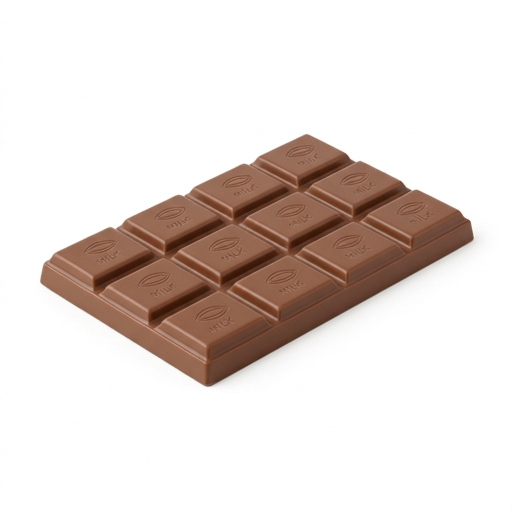
Milk chocolate bar — lowest toxicity risk for dogs at 64 mg theobromine per ounce
Milk Chocolate
64 mg/oz
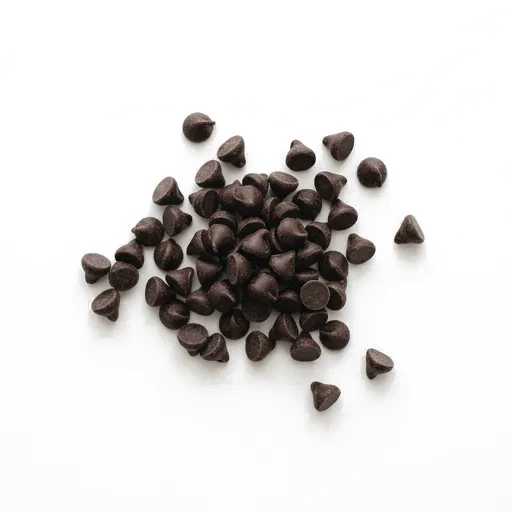
Semi-sweet chocolate morsels — moderate toxicity risk for dogs at 160 mg theobromine per ounce
Semi-Sweet
160 mg/oz
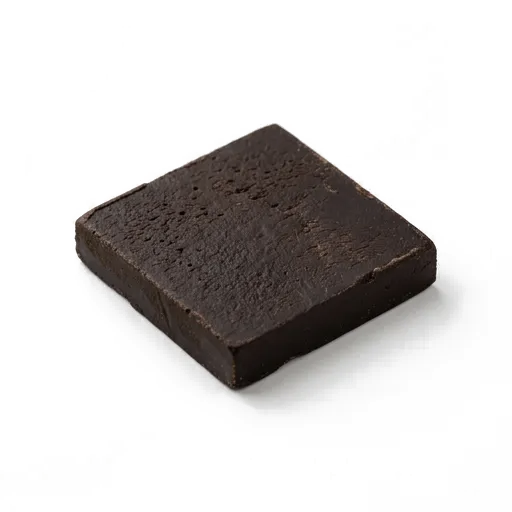
Unsweetened baker's chocolate square — high toxicity risk for dogs at 450 mg theobromine per ounce
Baker's Unsweetened
450 mg/oz
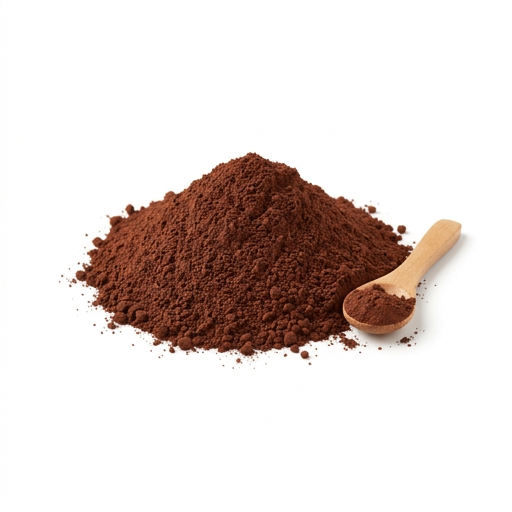
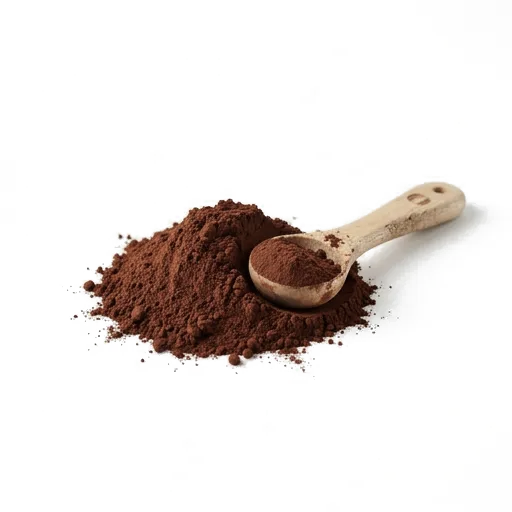
Dry cocoa powder — most dangerous chocolate type for dogs at 800 mg theobromine per ounce
Dry Cocoa Powder
800 mg/oz

White chocolate has negligible theobromine and is not included — the darker the chocolate, the more dangerous.

3
Amount of chocolate ingested
0.00
mg/kg methylxanthine level
02050150+
Dog Weight
Chocolate Type
Amount

Your dog may need immediate veterinary attention.

Find Emergency Vet

Quick Reference

Methylxanthine concentration by chocolate type. Darker = more dangerous.

Milk chocolate
Milk Chocolate
64 mg/oz
Candy bars, chocolate chips, hot cocoa mixes
Semi-sweet chocolate
Semi-Sweet
160 mg/oz
Baking morsels, chocolate chip cookies, dark candy
Baker's unsweetened chocolate
Baker's Unsweetened
450 mg/oz
Baking squares, unsweetened baking bars
Dry cocoa powder
Dry Cocoa Powder
800 mg/oz
Pure cocoa powder used in baking and drinks

Toxicity Thresholds

< 20 mg/kg
Minimal to no reaction — potential for upset stomach, diarrhea, or agitation
20–50 mg/kg
Mild reaction — vomiting, diarrhea, shaking, elevated heart rate, increased urination
50–150 mg/kg
Moderate to severe — tremors, seizures, irregular or rapid heartbeat, potential for collapse
150+ mg/kg
Potentially fatal — collapse, breathing problems, racing heart, potential sudden death

Chocolate Toxicity in Pets

Many of us have a deep and abiding love for chocolate in all of its forms, but this is not a passion we should share with our pets. Chocolate contains caffeine and theobromine, methylxanthines that are toxic when ingested in large quantities. Because humans are fairly large and have a high tolerance for these compounds, chocolate poisoning is an extremely rare event in human medicine. In veterinary medicine, however, this type of chocolate poisoning is fairly common in dogs.

Chocolate Toxicosis in the Real World

The easiest way to understand chocolate toxicosis in pets is to see how it operates in the real world. The three cases below illustrate three concepts owners need to understand to protect their pets.

Georgia the dachshund — 18-pound dog involved in chocolate poisoning case study
+
Three unsweetened baking chocolate squares — highly toxic to dogs
Why Chocolate is Toxic

The Dachshund and the Baking Squares

The Case

Georgia, a healthy 18-pound dachshund, found an open box of unsweetened baking chocolate on the counter. She ate the three squares remaining in the box.

Some time later, Georgia's owner noticed that she was shaking, seemed agitated and had no appetite. He found a large puddle of vomit that smelled like chocolate in the hall and a puddle of urine by the door. The owner also noticed that Georgia was having diarrhea. Her breathing was erratic, and her heart was racing. He rushed her to the emergency room.

What Caused Georgia's Symptoms?

Theobromine and caffeine stimulate the nervous system, affect heart rate, increase urine output and can cause a number of other symptoms. The higher the dose, the more dangerous the symptoms.

The LD50 (the dose that will kill half of a given population) of theobromine and caffeine in pets is approximately 100–200 mg/kg of body weight. The toxic dose, the dose at which symptoms occur, is much lower. For dogs and cats, it is about 20 mg/kg for mild symptoms and 40 mg/kg for more severe symptoms. There have, however, been reports of symptoms occurring after ingestion of even smaller amounts.

Using the calculator found above, we can see that for a dog of Georgia's size, 3 ounces of baking chocolate delivers a dose of 73.33 mg/kg. This is well above the toxic dose of 20 milligrams per kilogram and close to the potentially lethal dose of 100 milligrams per kilogram. Her symptoms of vomiting, diarrhea, shaking, increased heart rate and increased urination are typical of chocolate poisoning. Seizures are also likely given the amount of chocolate she ate. In fact, due to individual variation in methylxanthine processing and the possibility of complications, this is a potentially lethal situation for Georgia. With aggressive treatment, however, she should be fine.

For more information on chocolate toxicity in pets, see this Merck Veterinary Manual entry.
Rosie and Reggie the beagles — two 25-pound dogs in chocolate toxicity case study
+
Assorted chocolate sampler box with dark and white chocolate pieces
The Effect of Chocolate Type on Toxicity

The Two Beagles and the Sampler Box

The Case

While their owner was at work, two beagles got into a sampler box containing different types of chocolate pieces. Both dogs managed to eat about 3.5 ounces of chocolate. This is equivalent to a large or king-sized candy bar. The female dog, Rosie, really liked the white chocolate pieces and ate those exclusively. Reggie, her brother, ate the gourmet pieces that were made with 72 percent cocoa. Both dogs weigh approximately 25 pounds and were in good health when they ate the candy.

When the dogs' owner came home from work, she noticed that Rosie had a decreased appetite and mild diarrhea. Reggie was shaking and appeared extremely agitated. He was salivating, vomiting and having severe diarrhea. In the car on the way to the animal hospital, Reggie had a seizure.

Why Did the Dogs Have Different Reactions?

While both dogs ate the same amount of candy, they did not consume the same amount of methylxanthines. Dark chocolate, especially the type of very dark chocolate Reggie ate, contains a high concentration of theobromine. In fact, his estimated dose of methylxanthines is 40.29 mg/kg, enough to produce severe symptoms. By contrast, white chocolate contains a negligible amount of methylxanthines, so Rosie's symptoms were probably due to the high fat and sugar content of the candy rather than to chocolate poisoning.

Rule of thumb: The darker and less sweet the chocolate, the more dangerous it is. Lighter chocolates, like milk chocolate, have much lower concentrations of methylxanthines. This means that a dog could get sick or die from eating a small amount of baker's chocolate, but eating an equivalent amount of milk chocolate would produce no symptoms or mild symptoms.

For an excellent explanation of the differences between types of chocolate and the various toxicities of chocolate varieties, see this article from Veterinary Partner.

Annie the 70-pound Labrador and Max the 5-pound Chihuahua — body size affects chocolate toxicity
+
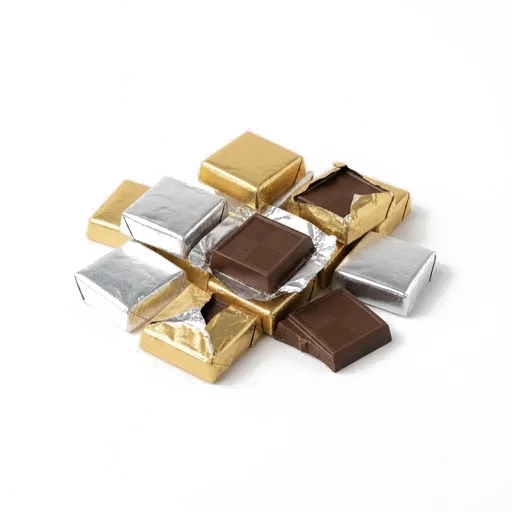
Foil-wrapped milk chocolate squares in gold and silver wrappers
Body Size and Toxic Dose

The Labrador, the Chihuahua and the Chocolate Squares

The Case

Two dogs, Max and Annie, discovered a bowl of foil-wrapped milk chocolates on the hall table. Annie, a 70-pound Labrador retriever, ate about 27 candies. Max, a 5-pound Chihuahua, ate about 18 squares. Each square weighed approximately 0.16 ounces. Both dogs were healthy before eating the candy.

Overnight, Annie vomited a few wrappers and some chocolate. She ate her breakfast greedily and showed no ill effects except for slightly soft stool that contained foil wrappers. Max was agitated, vomiting and experiencing diarrhea.

Why Did Max Get Sick Despite Having Eaten Less than Annie?

The bigger the dog or cat, the more chocolate it can safely ingest. Annie weighs 34 times as much as Max, so she would have had to have eaten about 34 times as much as he did to trigger similar symptoms. The dose of methylxanthines she ingested was about 3.69 mg/kg, and Max's estimated dose was 33.41 mg/kg.

While Annie's dose was well below the toxic threshold, Max's dose was more than sufficient to produce vomiting and diarrhea. Given the low methylxanthine dose she ingested, Annie's symptoms were probably due to eating the foil wrappers and the fat and sugar in the candy rather than chocolate poisoning.

Tabby cat — chocolate is more toxic to cats than dogs but poisoning is rare
A Note About Cats and Chocolate Poisoning

Cats and Chocolate

Chocolate is slightly more toxic to cats than to dogs, but chocolate poisoning is rare in cats. Cats have little ability to detect sweetness so are unlikely to consume sufficient candy or other chocolate-containing products to make themselves ill. However, because cats are potentially more sensitive to chocolate than dogs, if a cat does eat chocolate, its owner should be concerned.

The Take-Home Message on Chocolate Toxicity

Eating very small amounts of milk chocolate or chocolate-flavored treats will not harm most pets, but it is better to be cautious and keep all chocolate away from dogs and cats. Many factors, including individual variation, breed, health status and the type and amount of chocolate ingested, determine how a particular pet will respond to chocolate ingestion.

If your pet does eat chocolate, consider the type and amount ingested as well as the size of the animal. If the amount your pet ingested provides a dose that is potentially large enough to cause symptoms, seek veterinary help immediately. Call your veterinarian or the nearest emergency center for advice if you are in doubt or cannot tell how much chocolate your pet ate.

Embed This Calculator

Add this calculator to your own website. Copy the code below.